


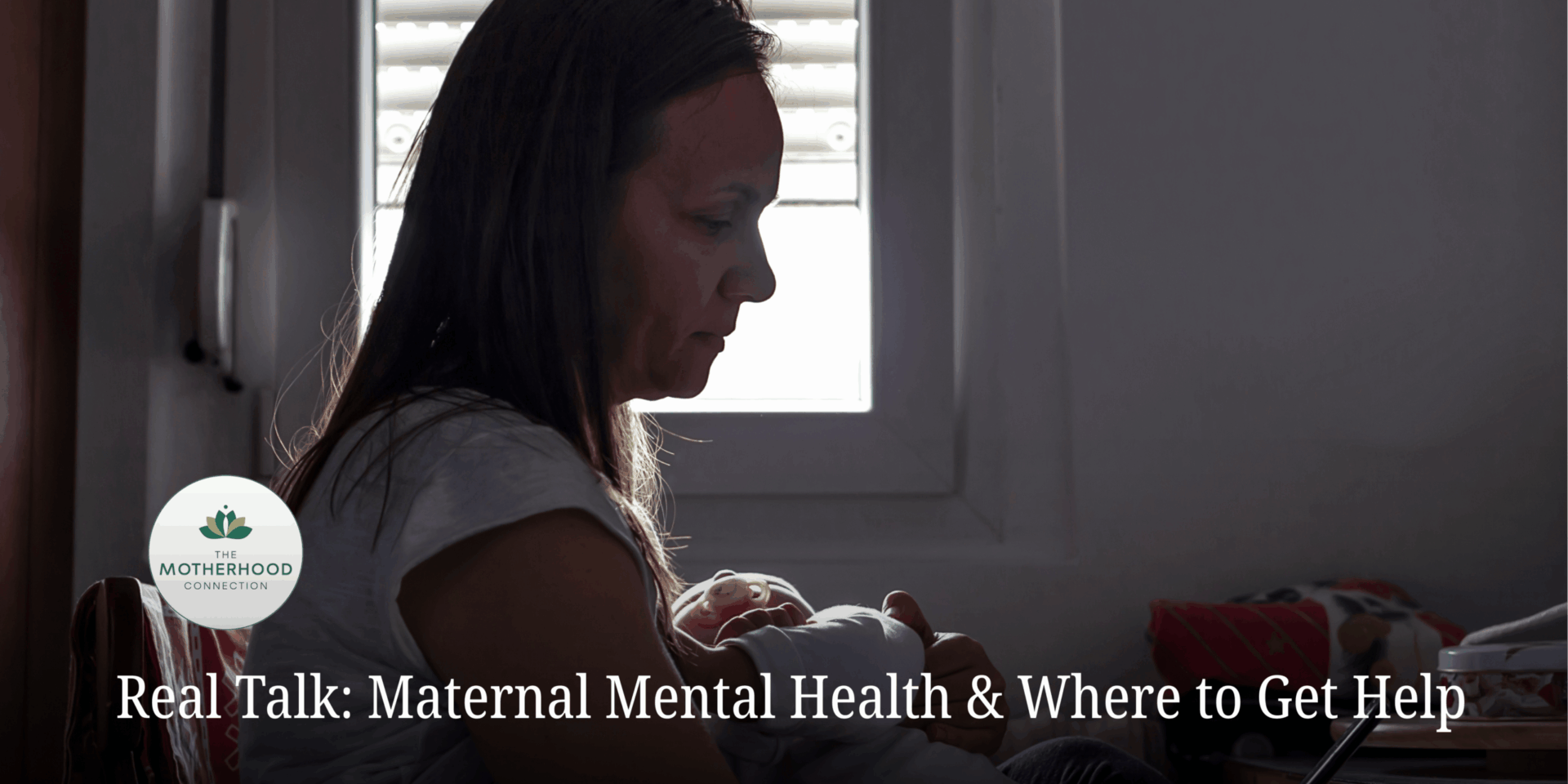
Real Talk: Maternal Mental Health & Where to Get Help
A conversation every Long Beach mama deserves to be part of
There’s a version of motherhood that gets shared online. The soft lighting. The sleepy baby. The quiet, sacred bond.
And then there’s the version many moms actually live.
The version where you’re exhausted in a way you didn’t know existed. Where your thoughts feel louder than your surroundings. Where you question yourself more than you expected. Where joy and overwhelm somehow sit side by side.
This is where maternal mental health lives. Not in perfection, but in the real, complicated, human experience of becoming and being a mother.
And here’s the truth that doesn’t get said enough: you are not the only one feeling this way.
Why Maternal Mental Health Matters More Than We Talk About
Maternal mental health includes your emotional, psychological, and social well-being during pregnancy and after birth. It is not a niche issue. It is one of the most common challenges mothers face.
- Around 1 in 5 women experience a mental health condition during pregnancy or postpartum
- About 1 in 8 women report symptoms of postpartum depression
- And up to 50 percent go untreated
That means in any mom group, at preschool pickup, or walking along the shoreline in Long Beach, there are women quietly carrying something heavy.
Not because they are weak.
Not because they are failing.
But because motherhood is a massive physical, emotional, and identity shift, and support doesn’t always meet them where they are.
What It Can Actually Feel Like
Maternal mental health struggles do not always look the way people expect them to. It is not always obvious sadness or something you can easily name. For many moms, it shows up in quieter, more confusing ways. You might feel disconnected from your baby or even from yourself, like you are moving through the day on autopilot. There can be constant worry that does not seem to turn off, even when everything is technically fine. Some moms find themselves crying more often, while others feel emotionally flat or numb. Sleep can be difficult, even when the baby is finally resting, and things that once felt enjoyable may no longer hold your interest. Simple daily tasks can start to feel overwhelming, and your thoughts may feel louder or harder to manage than usual. These experiences can come and go, or they can linger, making it difficult to tell what is normal and what might need more attention.
The “Why Didn’t Anyone Tell Me?” Moment
Many moms describe a moment where they realize something feels off, but they hesitate to say it out loud.
There are reasons for that:
- Fear of being judged
- Worry about being seen as a “bad mom”
- Pressure to feel grateful and happy
- Not knowing what is normal vs. not
- Lack of time or energy to seek help
And sometimes, it is simply this: no one prepared you for how complex this experience could be. We prepare for birth. We prepare the nursery. We prepare the registry, but we rarely prepare for the mental and emotional shift that comes after.
Signs It Might Be Time to Reach Out
It can be hard to know when to ask for help, especially when you are used to pushing through or telling yourself that things will get better on their own. But support does not have to wait until things feel unmanageable. If your feelings have been lingering for more than a couple of weeks, or if your thoughts feel intrusive, overwhelming, or difficult to control, it may be time to reach out. You might notice that you are struggling to function in your day to day life, feeling disconnected from the people around you, or no longer feeling like yourself. You may also find that you are avoiding situations or relationships that once felt easy. These are all valid signals that your mental and emotional load might be heavier than it should be. Reaching out is not a sign that something is wrong with you. It is a step toward getting the support you deserve.
Where to Get Help
If you are in Long Beach or surrounding areas, you are not as alone as it might feel. There are real, accessible resources available.
Immediate & 24/7 Support
- National Maternal Mental Health Hotline
Call or text: 1-833-TLC-MAMA
Free, confidential, available 24/7 for pregnant and postpartum moms - 988 Suicide & Crisis Lifeline
Call or text: 988
Available anytime for emotional distress or crisis support
If You’re Not Sure Where to Start
Start here:
- Tell one person how you’re actually feeling
- Write down what feels hardest right now
- Save a hotline number in your phone
- Give yourself permission to not have it all figured out
You do not need a perfect plan. You just need a first step.
To the Mom Reading This
If you are in Long Beach, walking your neighborhood, sitting in your car for a quiet moment, or scrolling late at night while your house is finally still…
This is for you.
You are not the only one feeling this way.
You are not behind.
You are not doing motherhood wrong.
You are navigating something that deserves more support than most people realize.
And you deserve that support too.
Disclaimer
This article is for informational and educational purposes only and is not intended to serve as medical advice, diagnosis, or treatment. If you are experiencing symptoms related to maternal mental health, please consult with a qualified healthcare provider or mental health professional. If you are in immediate distress or crisis, contact a licensed professional or call a crisis hotline right away.